

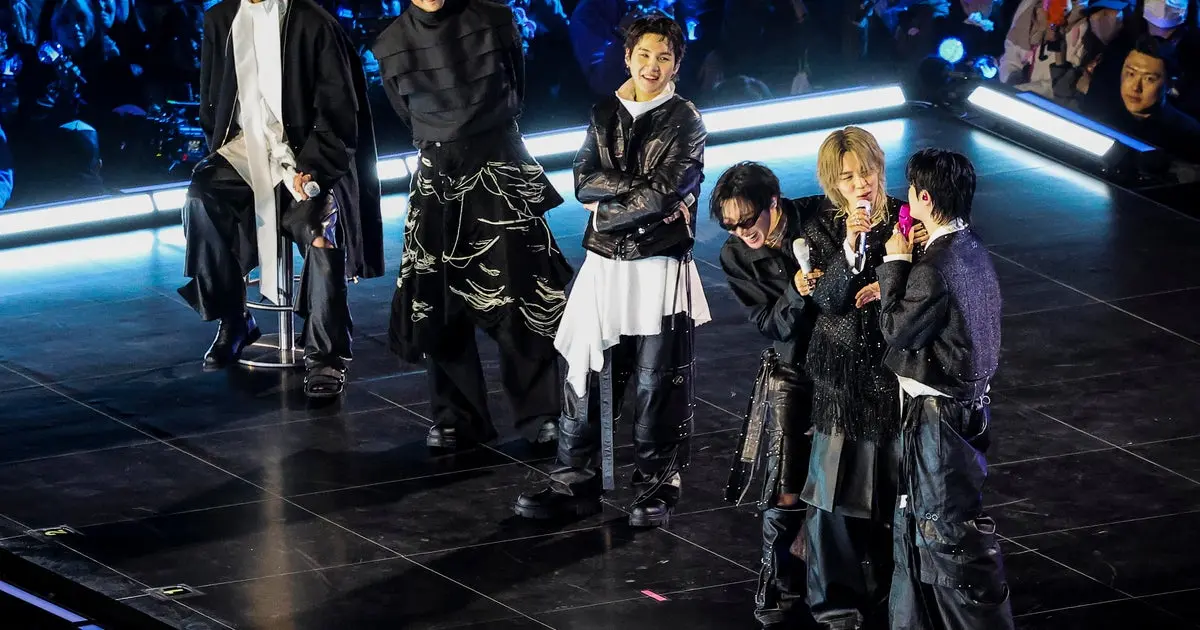
Bay Area fans of the K-pop superstar group BTS began their pilgrimage to Stanford Stadium more than 24 hours before the first of three historic concerts on campus. On Friday, the line to purchase BTS merchandise wrapped around the athletic track twice and extended beyond, with dedicated fans camping out since Thursday to secure exclusive items. The scene reflected the intense devotion BTS inspires, as supporters traveled from across the region and even from out of state to be part of the moment.
“For merchandise, I just spent $1,200. Yeah,” said Miguel, a fan who asked to be identified only by his first name. “It's because I'm getting a few for my friends and family members.” His experience was far from unique; many fans reported spending hundreds to thousands of dollars on hoodies, light sticks, and limited-edition collectibles. The merchandise tent featured items themed to the group’s latest album, Arirang, as well as classic pieces from previous tours.
The three-night run at Stanford Stadium is the only Northern California stop on the Arirang World Tour, which began April 9. This tour marks the first world series of concerts after the seven members of BTS completed their mandatory military service in South Korea. The members began their service in late 2022 and continued through 2023, during which the group took a hiatus from group activities. Several members, including RM, Jin, Suga, J-Hope, Jimin, V, and Jungkook, also released solo projects during that period, such as J-Hope’s Jack in the Box, RM’s Indigo, and Jungkook’s Golden.
This is the first BTS concert in the Bay Area since 2018, when they performed at the then-Oracle Arena in Oakland. The five-year gap, combined with the group’s military hiatus and the release of a new album, has intensified fan anticipation. The three shows on Saturday, Sunday, and Tuesday at the 50,000-seat Stanford Stadium are completely sold out, with tickets selling out within minutes of their release.
Local officials expect the concerts to generate a significant economic boost for the region. Spending on hotels, restaurants, transportation, and merchandise is projected to yield millions of dollars in state and local tax revenues. The Santa Clara Valley Transit Authority has deployed extra buses to handle the crowds, with several buses decorated in BTS imagery to honor the tour. Bus routes will be rerouted up to three hours before the 7 p.m. concert start times, and shuttle service will drop fans directly in front of the stadium. Caltrain has also added additional trains, which are BTS-themed and may inspire fans to turn them into impromptu dance parties along the Peninsula.
BTS is widely considered one of the most popular bands of any genre globally. A recent economic report indicated that the group contributes approximately $4.5 billion annually to South Korea’s gross domestic product, driven by album sales, concert revenues, merchandise, tourism, and cultural influence. The group has surpassed 40 billion streams on Spotify, and on social media platforms like Instagram, TikTok, and X (formerly Twitter), BTS has more followers than any other musical group. Their army of fans, known as the BTS ARMY, spans nearly every country and demographic.
The group’s management agency, HYBE, reported that Arirang sold 3.98 million copies on its first day of release—an unprecedented figure that shattered previous records. The music video for the title track “SWIM” surpassed 40 million views on YouTube within 24 hours, highlighting the group’s digital dominance. The Arirang World Tour is the largest BTS tour to date, spanning 34 regions with 79 shows. The tour includes stops in Asia, Europe, the Americas, and Oceania, and has been met with sold-out crowds at every venue.
Fans at Stanford Stadium expressed what makes BTS music so meaningful to them. “They just want everyone to just love themselves and to be happy, and in their music, just talks all about that,” said Rosa, a fan who drove from Southern California. “They're very vulnerable about their lyrics and how they just talk about themselves and what they're going through.” That emotional connection, she explained, is why fans feel such a strong bond with the group and with each other.
Anaheim resident Stephanie Boden, who has attended multiple BTS concerts in the past, described the atmosphere inside the venue as transformative. “The feeling in the arena is something I can't even explain,” she said. “It’s a mix of joy, catharsis, and pure energy. When the music starts, everyone is united.”
The concerts at Stanford Stadium also highlight the growing presence of K-pop in American mainstream culture. BTS has paved the way for other K-pop acts, such as BLACKPINK, Stray Kids, and TWICE, to tour large stadiums in the United States. Their success has also led to a greater interest in Korean language and culture, with many fans taking up Korean language classes or traveling to South Korea.
In the hours leading up to the first show, Stanford campus was a sea of purple—the official color of the BTS ARMY—as fans wore custom-made outfits, held banners, and sang along to BTS songs played from portable speakers. Some fans had camped since Thursday to get the best view of any potential sighting of the members, while others simply wanted to soak in the communal atmosphere. The dedication of the ARMY is legendary; for these three nights, Stanford Stadium becomes a temple of K-pop worship.
The tour’s production values are equally impressive. Reports indicate that the stage includes massive LED screens, intricate lighting rigs, and special effects that rival the biggest pop acts in the world. Choreography by the group’s longtime performance directors integrates martial arts, modern dance, and traditional Korean elements, notably referenced in the Arirang album’s title track. The album itself blends Korean folk motifs with contemporary hip-hop, pop, and EDM, showcasing the group’s versatility.
BTS’s return from military service has been marked by a renewed sense of purpose. In interviews, the members have spoken about how their time away gave them new perspectives on their craft and their bond as a group. The new album explores themes of reunion, identity, and resilience. “SWIM,” the lead single, uses water as a metaphor for overcoming adversity and staying afloat in a tumultuous world. The song’s choreography includes synchronized swimming-inspired moves, much to the delight of fans.
The economic impact of the Stanford shows extends beyond direct spending. Local businesses near the stadium, such as restaurants, hotels, and retail shops, have reported a surge in customers. Some hotels have offered special BTS-themed packages, including room decor and shuttle tickets. The event is also expected to generate significant media coverage for Stanford University and the surrounding area, boosting its profile as a destination for major entertainment events.
Transportation officials have urged concertgoers to use public transit due to limited parking. The Santa Clara Valley Transit Authority has increased service on key routes and will run shuttles from the Palo Alto Caltrain station to the stadium. Caltrain’s extra trains are decorated with BTS posters and will run later than usual on concert nights. Fans have expressed excitement about the themed trains, calling them “purple trains” in reference to the ARMY color.
Security is also tight, with Stanford University police coordinating with local law enforcement to ensure safety. Bags are subject to search, and clear-bag policies are in effect. Despite the security measures, fans are in high spirits. Lines formed early for entry gates, with many arriving hours in advance to secure prime spots on the stadium floor. The group’s dedicated fan projects, such as coordinated light stick waves and fan chants, have been planned for weeks through social media.
The three concerts at Stanford Stadium are part of a broader cultural phenomenon. BTS has been recognized by the South Korean government for their contributions to the country’s soft power, and they have been invited to speak at the United Nations. Their influence extends to fashion, music production, and philanthropy, including a $1 million donation to the Black Lives Matter movement and partnerships with UNICEF.
As the first concert approached on Saturday evening, the energy around Stanford Stadium was palpable. Fans from all walks of life—students, families, groups of friends, and even some older couples—gathered to witness a moment that many had waited years for. For the ARMY, these three nights are not just concerts; they are celebrations of community, resilience, and the universal language of music. And for the Bay Area, the return of BTS signifies that K-pop is here to stay.
Source: Cbsnews News