

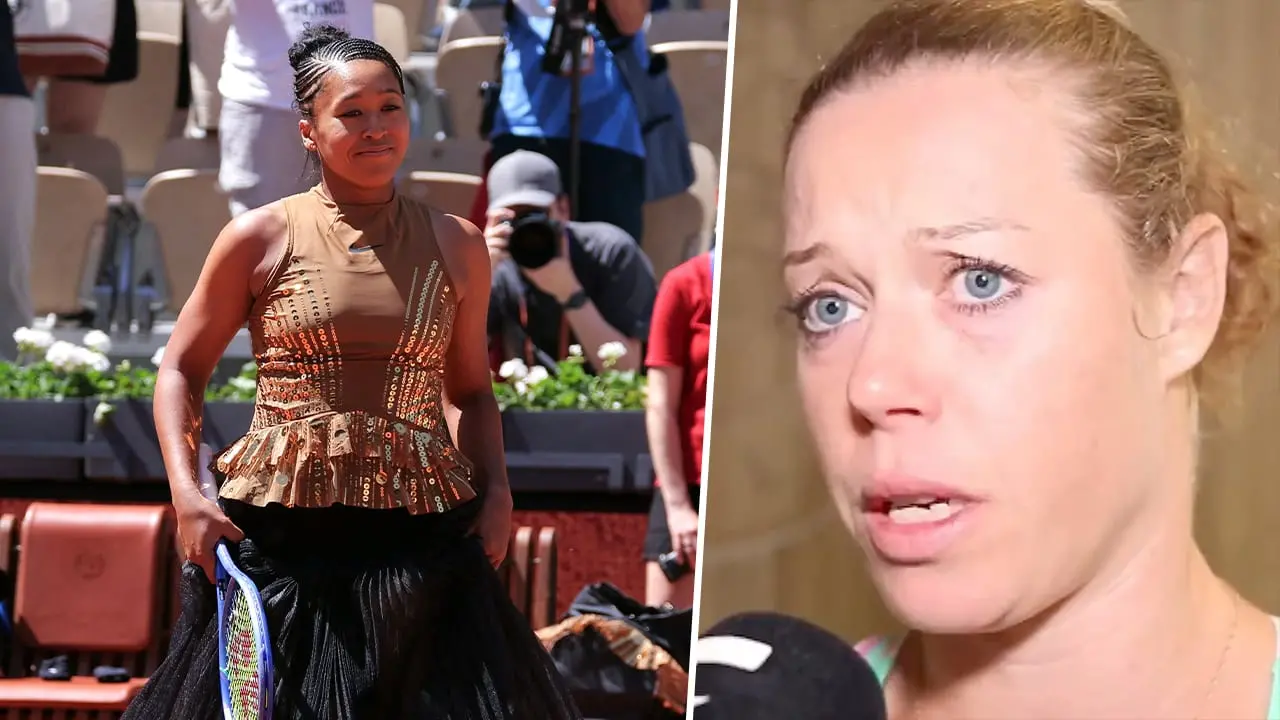
Laura Siegemund, the 38-year-old German tennis veteran, did not hold back her frustration after her first-round exit at the French Open against Naomi Osaka. While Osaka's sparkling bronze dress with a long train stole the spotlight, Siegemund was furious about the time the Japanese star took to change out of it before the match. The German claimed this was yet another example of unfair treatment in tennis, where bigger names are allowed to bend the rules. The incident has reignited debates about consistency in officiating and the role of fashion in professional sports.
Match Incident and Immediate Reaction
The match on Court Suzanne Lenglen saw Osaka defeat Siegemund 6-3, 7-6. But the focus quickly shifted from the scoreline to the pre-match routine. Osaka arrived wearing a custom Kevin Germanier creation—a bronze, glittering dress paired with a floor-length black skirt, reminiscent of Rococo elegance. She took approximately 90 seconds to remove the outfit and prepare for the warm-up. During the match, Siegemund received a time violation for serving too slowly—a penalty that left her seething.
In an interview with Eurosport, Siegemund said: "At every tournament, they watch every second until you unpack your water bottle. And then she can take one and a half minutes to change? I have a problem with that. There is this rule, and nowadays they check every second so sharply. I think that during such entrances, they should also check every second." She concluded: "Once again, bigger names are treated differently. If I took that long, taking a little pause here and there, the umpire would call a time violation. But with her, he says nothing. That's the only thing that interests me. Whether she comes with a train is irrelevant to me."
Osaka's Fashion and Defense
Osaka, the four-time Grand Slam champion and former world No. 1, has become known for her bold fashion statements in recent years. She wore remarkable outfits at the US Open and Australian Open, using clothing as a form of expression. "I don't talk much," she said after the match. "But through my clothing, I can express myself." Comparing her dress to the sparkling Eiffel Tower at night, Osaka added: "I feel like I look a little like that." The dress by Swiss designer Kevin Germanier was indeed a spectacle. Many fans praised her creativity, while critics noted that such elaborate attire can be impractical for a sport that values swiftness.
Siegemund, however, made it clear that she avoids fashion statements on court. "I don't come here to put on a fashion show. If others want to do that, it's okay for me." She also said the glitter did not distract her during play: "No, that was not an issue. I only look at the ball, not at what my opponent is wearing."
Context of Time Violations in Tennis
Time violations in tennis have become a hot topic since the introduction of stricter shot clocks at Grand Slams. Players are allowed 25 seconds between points (20 seconds in some tournaments) and must be ready to return serve within that window. However, pre-match preparations, including outfit changes, are not covered by the same exact rules unless they cause deliberate delay. The umpire has discretion. In this case, the umpire allowed Osaka extra time because the change was part of her entrance, not a stalling tactic. Siegemund's time violation came during a changeover when she took too long to serve—a typical enforcement area.
This disparity has led to accusations of favoritism toward marquee players. In 2022, similar complaints were raised when Serena Williams received leniency. The rulebook states that the umpire should ensure "fairness" and prevent "unreasonable delay," but it leaves room for interpretation. Siegemund's argument is that the rule should be applied uniformly regardless of star power. Tennis officials have not commented on this specific incident, but the debate is unlikely to end soon.
Laura Siegemund: Career and Perspective
Siegemund is no stranger to high-profile matches. At 38, she is one of the older players on the WTA Tour. She has won one singles title and several doubles titles, including a US Open mixed doubles crown. She reached a career-high singles ranking of No. 27 in 2018 but currently sits at world No. 88. Known for her fighting spirit, she often speaks her mind. This latest outburst aligns with her reputation as a player who calls out perceived injustices.
Some fans and analysts sympathize with Siegemund, arguing that consistent rule enforcement is essential for the integrity of the sport. Others point out that Osaka's outfit change, while slow, is a unique circumstance that does not affect gameplay once the match begins. The controversy highlights the tension between tradition and modern entertainment in tennis. Grand Slams increasingly court fashion partnerships, and players like Osaka, Serena Williams, and Maria Sharapova have leveraged clothing to draw attention. But for players lower in the rankings, every second counts, and they feel the weight of the rules more acutely.
Historical Examples of Pre-Match Outfit Issues
The French Open has seen other outfit-related delays. In 2018, Serena Williams wore a catsuit that officials deemed inappropriate, though they later reversed the ban. Andre Agassi famously refused to wear all-white at Wimbledon in the 1980s, leading to a boycott. More recently, players like Coco Gauff and Ons Jabeur have used fashion to make political or personal statements. The difference here is that Osaka's outfit was purely about aesthetics, not a violation of dress codes. The timing of the removal is the contentious point.
Former umpire Richard Ings commented on the Siegemund-Osaka situation in a social media post: "Umpires must manage the match flow. Allowing extra time for a costume change before the match is reasonable. Once the match starts, the shot clock applies equally. But I understand Siegemund's frustration when she feels the standard is applied unevenly. The solution is clearer guidelines for pre-match delays."
Impact on the Match and Future Implications
Siegemund's outburst may not change the outcome of the match, but it adds another layer to the ongoing conversation about player treatment. Tennis governing bodies might consider revising the rules to explicitly cover pre-match activities, including outfit changes. Alternatively, they could reinforce that umpires have broad discretion and that players should adapt to the environment. For now, the French Open continues, and Osaka advanced to the second round. Siegemund will head home, but her words will echo in the media.
This incident also underscores the challenges of balancing sport and spectacle. Tennis has always been a blend of athleticism and elegance, but in the era of social media and sponsorships, visuals matter more than ever. Osaka's dress generated massive online engagement, with millions of views across platforms. That publicity benefits the tournament and the sport. However, players like Siegemund argue that the core product—the tennis match—should not be compromised for a parade of fashion.
At the heart of this controversy is a simple question: should rules apply equally to all players, or should star players get leeway in non-competitive moments? The answer is not clear-cut, but Siegemund's protest has forced a discussion. Tennis fans are divided. Some applaud her for standing up for fairness, while others dismiss her as a sore loser. Regardless, the topic will likely persist as long as top players use the court as a runway.
Source: bild.de News