

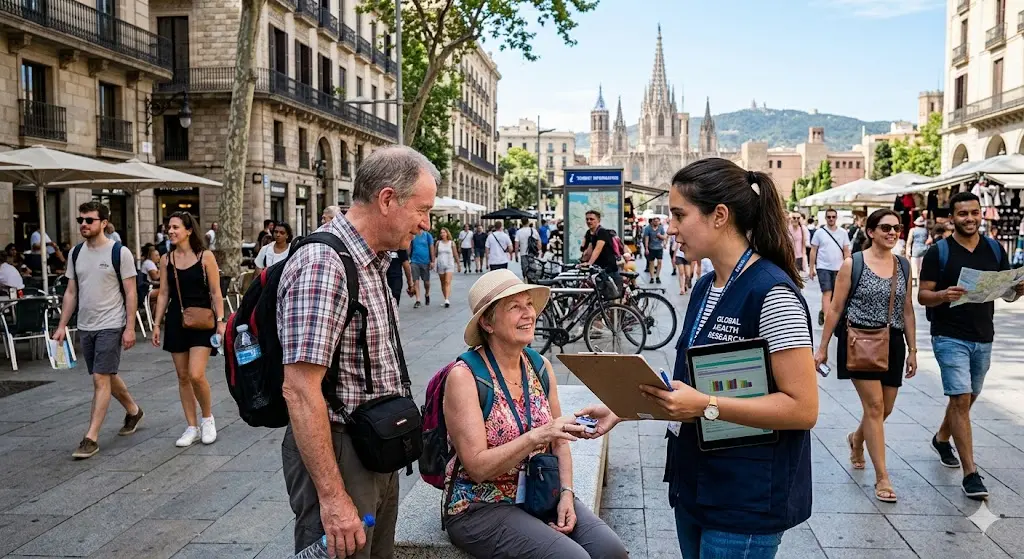
Urban tourism and public wellness research is becoming a serious focus for cities that are dealing with crowded streets, rising visitor numbers, and changing health expectations. You’re not just looking at travel anymore—you’re looking at how movement, environment, and human behavior intersect in dense urban spaces. What I’ve noticed is that cities don’t struggle with tourism itself, they struggle with how tourism quietly reshapes public health outcomes in ways people only notice when problems get big.
Here’s the thing: tourists don’t just consume a city, they temporarily become part of its biological and social system. That’s where wellness either holds up or starts to crack.
Urban tourism and public wellness research studies how visitor activity in cities influences public health, infrastructure stress, environmental quality, and community well-being. It matters because rising tourism can improve economies while also increasing pollution, congestion, and healthcare pressure. Understanding this balance helps cities design healthier, more livable environments for both residents and visitors.
What Is Urban Tourism and Public Wellness Research?
Definition Box:
Urban tourism and public wellness research is the study of how travel activity within cities impacts physical health, mental well-being, environmental conditions, and public infrastructure capacity.
At its core, this field connects two things that don’t always speak to each other: tourism development and public health systems. You might think tourism is just about hotels, attractions, and transport, but in reality it affects air quality, emergency services, local stress levels, and even patterns of disease transmission.
In most cases, researchers are trying to answer a simple but messy question: Can a city stay enjoyable for visitors without making life harder for the people who live there?
Let me be direct—this isn’t just academic curiosity. Cities are feeling pressure in real time, especially those with high seasonal tourist spikes.
From what I’ve seen in practice, the most overlooked part is mental wellness. Everyone focuses on crowd density or transport systems, but fewer people talk about how constant crowding changes resident behavior and emotional fatigue.
Why Urban Tourism and Public Wellness Research Matters in 2026
Cities in 2026 aren’t dealing with tourism the same way they did even a decade ago. Visitor numbers are more unpredictable, travel is more frequent but shorter, and urban spaces are being consumed faster than they can adapt.
What most people overlook is that wellness pressure doesn’t show up instantly—it builds slowly. A city might look fine on paper while residents quietly adjust their behavior: avoiding peak hours, skipping public spaces, or feeling less connected to their neighborhoods.
In my experience, that’s usually the first sign something is off.
There’s also a bigger shift happening. People now expect cities to feel “healthy,” not just functional. Clean air, walkable streets, and low stress environments are becoming part of the tourism decision-making process, even if travelers don’t consciously say it out loud.
One unexpected angle? Some cities actually report temporary mental health improvement among residents during off-peak tourist seasons, which suggests tourism intensity directly affects emotional well-being more than most policy reports admit.
How to Study Urban Tourism and Public Wellness — Step by Step
Understanding this field requires mixing data, observation, and a bit of behavioral intuition. Here’s a simple breakdown of how researchers and planners usually approach it.
1. Map tourist movement patterns
You start by tracking how visitors move through a city. Not just where they go, but when and how densely they cluster. This helps identify pressure zones that affect both health and infrastructure.
2. Measure public health indicators
Next, you look at hospital visits, air quality changes, heat stress incidents, and even fatigue-related issues in transport hubs. The goal is to connect tourism spikes with health outcomes.
3. Study resident behavior changes
This is where things get interesting. You observe how locals adjust routines—shopping hours, commute timing, or public space usage. Small shifts often reveal bigger wellness impacts.
4. Analyze environmental stress
Tourism adds pressure to waste systems, water usage, and emissions. These environmental shifts often feed directly into public wellness outcomes, even if indirectly.
5. Compare peak vs off-peak seasons
This step helps isolate tourism impact from normal city activity. Differences between these periods often show the real cost or benefit of tourism flows.
Common Misconception About Urban Tourism and Health
A lot of people assume more tourism automatically improves urban well-being because it brings money and development. That’s not always true.
Here’s the counterintuitive part: in some cities, moderate tourism levels create more stress than very high or very low levels. Why? Because infrastructure gets stretched but not fully upgraded, so residents experience constant friction without clear benefits.
It’s a bit like running a system at 80% overload all the time—it doesn’t break, but it never really rests either.
Expert Tips: What Actually Works in Real Cities
From what I’ve seen across different urban environments, there are a few patterns that quietly make a big difference.
One is designing “dual-purpose infrastructure.” Streets, parks, and transit systems that serve both locals and visitors without creating separate lanes of behavior tend to reduce tension. It sounds simple, but most cities don’t actually do it well.
Another insight is that timing matters more than volume. A city can handle a lot of tourists if arrivals are spread out. But clustered arrivals—even at lower numbers—can overwhelm wellness systems quickly.
And here’s a personal observation: cities that actively communicate with residents about tourism patterns tend to maintain better public sentiment. Even if nothing changes physically, people feel less stressed when they understand what’s happening around them.
Also worth mentioning is something that often gets ignored—heat and crowd interaction. In warmer months, crowd density doesn’t just feel uncomfortable, it can directly affect dehydration risk and emotional irritability. That link is stronger than most policy reports suggest.
Real-World Mini Case Examples
Imagine a mid-sized coastal city that experiences sudden cruise tourism spikes. On arrival days, emergency services see increased minor health incidents—mostly heat exhaustion and fatigue. Nothing dramatic individually, but collectively it strains resources.
Now contrast that with a large metropolitan hub that distributes tourism through multiple districts. Even with higher total visitors, wellness indicators remain more stable because pressure is absorbed across zones instead of concentrated in one area.
What most people miss is that the structure of tourism matters more than the size of tourism.
People Most Asked About Urban Tourism and Public Wellness
How does tourism affect public health in cities?
Tourism can increase air pollution, crowd-related stress, and pressure on healthcare services. At the same time, it can fund better infrastructure and sanitation improvements. The net effect depends on how well a city manages flow and capacity.
Can tourism improve mental wellness in urban areas?
Yes, but indirectly. Tourism can improve cultural vibrancy and economic confidence, which supports mental well-being. However, excessive crowding may reduce resident satisfaction if not balanced properly.
Why do cities struggle with tourism pressure?
Most cities grow tourism faster than infrastructure. Transport, housing, and healthcare systems often lag behind visitor growth, creating friction points that affect both residents and travelers.
What is the biggest hidden impact of urban tourism?
The emotional fatigue of residents. It’s not always visible in data, but repeated exposure to crowded environments can slowly reduce community engagement and personal well-being.
Does urban design influence tourism health outcomes?
Absolutely. Walkable layouts, green spaces, and distributed attractions tend to reduce stress and improve both visitor experience and public wellness outcomes.
Promotional Insight for Digital Visibility and Growth
Our network site provides related offerings for guest posting services, press release news submission, SEO and local business listing solutions designed to improve brand visibility and organic traffic. With high authority backlinks, businesses can achieve stronger SEO ranking through PR distribution services and news distribution platforms while expanding exposure via online press release distribution and citation building services. Explore enhanced visibility opportunities here: Press Release Distribution Services and digital marketing agency for scalable growth and improved media coverage