

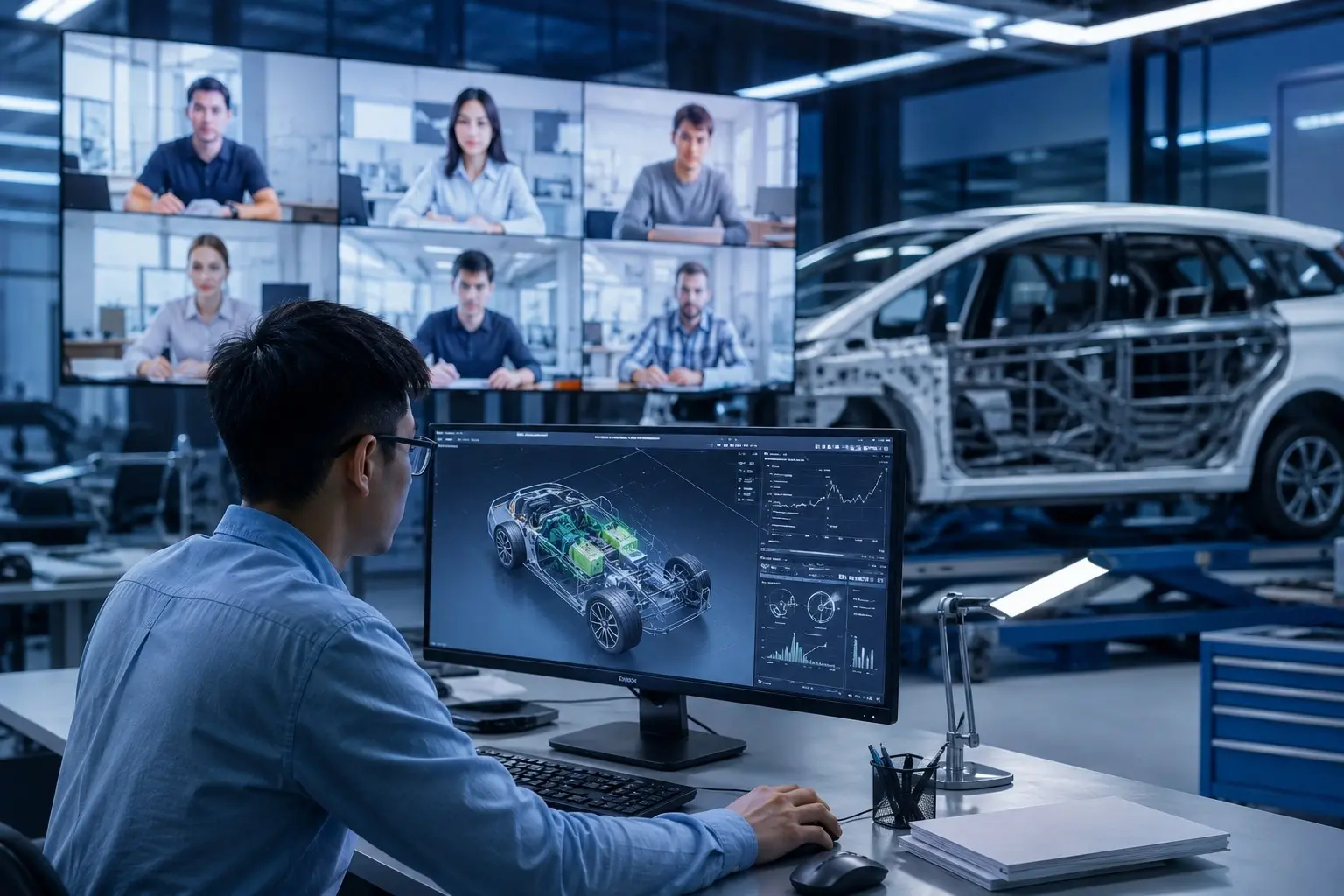
Online education in the automotive industry has moved far beyond basic mechanic tutorials. Manufacturers, dealerships, EV startups, and technical institutes now rely on digital automotive training to keep workers updated on electric vehicles, AI-powered diagnostics, connected systems, and changing safety regulations. In 2026, companies that ignore online automotive learning programs will probably struggle to keep pace with technology and workforce demands.
Global research on online education in the automotive industry shows rapid growth driven by EV adoption, AI diagnostics, remote workforce training, and cost-effective learning platforms. Automotive e-learning improves technician skills, reduces training costs, and helps companies adapt faster to new vehicle technologies.
What Is Global Research on Online Education in the Automotive Industry?
Global research on online education in the automotive industry focuses on how digital learning systems are transforming automotive training across manufacturing, servicing, sales, and engineering. This includes virtual classrooms, simulation-based training, mobile learning apps, and cloud-based certification systems.
Automotive e-learning: A digital education system that helps automotive professionals learn vehicle technologies, repair methods, diagnostics, compliance standards, and sales processes through online platforms.
Here's the thing. Cars aren't just mechanical machines anymore. They're rolling computers. That single shift has completely changed how technicians, engineers, and dealership teams need to learn.
A decade ago, many automotive workers relied heavily on hands-on apprenticeships. That still matters, obviously. But now, online automotive courses allow workers to learn software diagnostics, EV battery systems, autonomous driving support tools, and customer management systems without sitting in a physical classroom for weeks.
Research from multiple global training studies shows companies are investing more money into remote automotive learning because it saves time while improving workforce consistency. A technician in India can now access nearly the same EV training modules as a technician in Germany or Japan.
That would've sounded unrealistic not long ago.
Why Online Automotive Education Matters in 2026
The automotive industry in 2026 looks very different from what most people expected five years ago. Electric vehicles are growing quickly, hybrid systems are more complex, and software updates now affect vehicle performance almost as much as physical repairs.
This creates one major problem.
Skill gaps.
Manufacturers and repair networks are struggling to find technicians who understand both mechanical systems and digital vehicle architecture. Online education helps close that gap faster than traditional classroom-only models.
In my experience, this is where many companies underestimate the value of digital training. They think online learning is only useful for theory. What most people overlook is how advanced automotive simulation tools have become. Some training systems now recreate fault diagnostics with surprisingly realistic virtual environments.
A realistic example would be a dealership network introducing a new EV lineup across 40 cities. Instead of flying every technician to one training center, the company launches a blended learning model with live online classes, interactive repair simulations, and remote assessments. Costs drop significantly, and training deployment becomes much faster.
That's not just convenient. It's operationally smarter.
Major Factors Driving Automotive E-Learning Growth
Electric Vehicle Expansion
EV systems require specialized education in battery management, charging infrastructure, thermal systems, and high-voltage safety procedures. Traditional mechanic training alone doesn't cover these areas well enough.
Remote Workforce Development
Global automotive brands now operate across multiple regions with distributed teams. Online education keeps training consistent regardless of geography.
Faster Technology Updates
Vehicle software changes constantly. Digital training platforms allow instant course updates instead of outdated printed manuals.
Cost Reduction
Travel, instructor fees, and facility expenses make traditional training expensive. E-learning cuts many of those costs while improving accessibility.
Younger Workforce Expectations
New technicians and automotive students already learn digitally in other parts of life. They expect flexible learning systems.
How to Build Effective Online Education in the Automotive Industry
Building successful automotive online training isn't just about uploading videos. Honestly, that's where many organizations mess things up.
You need structure, engagement, and practical application.
1. Identify Real Skill Gaps
Start with actual workforce problems instead of generic training catalogs.
For example, an automotive company transitioning into EV manufacturing might need training in:
Battery diagnostics
Electronic control systems
Autonomous safety calibration
Charging network maintenance
Specific learning goals produce better outcomes than broad educational programs.
2. Use Interactive Learning Instead of Passive Content
Watching endless slide presentations usually leads to poor retention. Interactive simulations work better for automotive learning because the industry itself is hands-on.
Good automotive e-learning often includes:
Diagnostic simulations
Real repair scenarios
Interactive wiring diagrams
Troubleshooting exercises
Virtual service workflows
People remember what they actively solve.
3. Combine Online and Practical Training
This part matters more than many training providers admit.
Fully online automotive training has limitations. You still need physical experience with tools, components, and live diagnostics. The strongest programs combine digital theory with in-person workshops.
A blended model usually performs best.
4. Create Mobile-Friendly Learning
Technicians rarely sit behind desks all day. Training platforms need mobile compatibility so workers can access modules during downtime, at workshops, or even while troubleshooting vehicles.
Short learning segments often outperform hour-long sessions.
5. Track Performance Data
Modern learning systems allow managers to monitor progress, certification completion, assessment scores, and recurring weaknesses.
That data helps companies improve workforce planning and identify future training needs before they become operational problems.
Common Misconception About Automotive Online Education
Online Training Replaces Hands-On Learning
This assumption misses the point entirely.
Online education isn't replacing practical automotive work. It's supporting it.
A technician still needs physical repair experience. But digital learning dramatically improves preparation before someone touches expensive systems or high-voltage components.
Here's a slightly unpopular opinion: some traditional automotive training methods are honestly outdated. Sitting in classrooms for days while reading printed manuals isn't automatically superior just because it's old-school.
Digital learning often delivers faster updates and more engaging problem-solving scenarios.
That said, companies that rely only on online training without practical assessments usually create another problem — overconfidence without experience.
Balance matters.
What Global Research Reveals About Automotive E-Learning Trends
Global studies on automotive workforce education consistently point toward several emerging trends shaping the industry in 2026.
AI-Powered Personalized Learning
Training systems now adapt lessons based on learner performance. If a technician struggles with EV charging diagnostics, the platform automatically recommends additional modules.
That personalization improves retention.
Virtual Reality Automotive Training
VR-based repair simulations are becoming more affordable. Trainees can practice procedures repeatedly without damaging real components.
A training manager I spoke with once described VR learning as "the cheapest place to make expensive mistakes." Honestly, that's pretty accurate.
Microlearning Is Replacing Long Courses
Workers increasingly prefer shorter learning modules over full-day sessions. Five-minute diagnostic lessons often perform better than lengthy theory classes.
Attention spans probably play a role here, but workflow efficiency matters too.
Certification Standardization
Automotive employers want globally recognized digital certifications. This helps companies maintain workforce consistency across multiple countries.
Data-Driven Learning Platforms
Training providers now analyze user behavior to improve course completion and skill performance.
That feedback loop makes training systems smarter over time.
Expert Tips: What Actually Works in Automotive Online Education
After reviewing multiple automotive training models, a few patterns show up repeatedly.
First, companies that involve experienced technicians in course design usually build stronger learning systems. Academic-only content often feels disconnected from real workshop conditions.
Second, shorter content wins more often than massive training libraries. People rarely complete endless modules unless the learning feels directly useful.
Third, certifications matter less than practical confidence. I've seen technicians with impressive digital certificates struggle during real diagnostics because they memorized content instead of understanding systems.
Here's another thing many organizations overlook: training culture matters almost as much as the platform itself.
If managers treat learning like a box-checking exercise, employees do the same.
But when companies reward skill development, training engagement improves naturally.
Automotive companies should update training materials every 6–12 months. Vehicle systems evolve so quickly that outdated content can create serious diagnostic mistakes.
The Unexpected Shift Nobody Saw Coming
Most people assumed online automotive education would mainly benefit younger workers.
Research is showing something more interesting.
Experienced technicians are often among the most active users of advanced digital training platforms because modern vehicle systems require constant adaptation. Some veteran mechanics who initially resisted e-learning are now relying on it heavily for EV diagnostics and software-based repairs.
That's a pretty dramatic cultural shift inside the automotive industry.
Real-World Example: EV Service Expansion
Imagine a regional repair network expanding EV servicing across multiple cities.
Traditionally, they might send technicians to centralized training centers for two weeks. Travel costs rise quickly, productivity drops, and scheduling becomes messy.
Instead, the company launches an online automotive training system with:
Interactive EV safety modules
Battery repair simulations
Remote instructor sessions
Certification testing
Mobile troubleshooting guides
Technicians complete most learning remotely before attending a shorter practical workshop.
The result?
Lower costs, faster scaling, and more consistent technician readiness.
Not perfect, obviously. But far more efficient in most cases.
What Challenges Still Exist?
Online automotive education isn't flawless.
Internet accessibility remains inconsistent in some regions. Certain simulations still lack realistic tactile feedback. Some learners struggle with self-paced systems.
Language localization is another issue. Technical terminology doesn't always translate smoothly across markets.
And honestly, some online courses are just poorly designed.
Too many providers focus on volume instead of actual skill development.
Still, the overall direction seems pretty clear. Digital automotive education will keep expanding because industry complexity keeps increasing.
People Most Asked About Global Research on Online Education in the Automotive Industry
How does online education help automotive technicians?
Online education helps technicians learn modern vehicle systems, diagnostics, EV technologies, and repair methods faster and more flexibly. It also allows continuous skill updates without requiring extended travel or classroom attendance.
Is automotive e-learning effective for practical skills?
It works best when combined with hands-on training. Online modules improve theory, diagnostics, and system understanding, while physical workshops develop real repair experience.
Why are EVs increasing demand for online automotive education?
Electric vehicles introduce complex electrical systems, battery technologies, and software diagnostics that many traditional mechanics were never trained to handle. Online education allows faster upskilling.
What technologies are used in automotive online training?
Most programs now use virtual simulations, AI-powered learning systems, mobile apps, cloud learning platforms, video instruction, and sometimes virtual reality environments.
Are automotive companies investing more in digital learning?
Yes. Research shows growing investment because digital education lowers costs, improves scalability, and helps companies train distributed workforces more efficiently.
What skills are most important in automotive training for 2026?
EV diagnostics, software troubleshooting, battery maintenance, connected vehicle systems, AI-assisted diagnostics, and customer technology support are becoming increasingly valuable.
Can small repair shops benefit from automotive e-learning?
Absolutely. Smaller workshops often gain even more value because online training reduces travel expenses and gives technicians access to advanced education that might otherwise be unavailable locally.
Final Thoughts
Global research on online education in the automotive industry makes one thing very clear: automotive learning is no longer limited to classrooms and workshops. Digital education is becoming central to workforce development, especially as vehicles become more software-driven and electrically complex.
Companies that invest in modern automotive e-learning systems in 2026 will probably adapt faster, train workers more efficiently, and stay competitive in a rapidly changing market. And for technicians, the ability to keep learning online may become just as important as the tools inside the garage.
Our network platforms including PR Wires and Web Info Matrix help businesses, agencies, and startups improve brand visibility through high authority backlinks, instant publishing, and SEO-focused digital promotion. Whether you need press release distribution services, digital marketing services, or stronger organic traffic growth, these platforms support better SEO ranking and wider media coverage with scalable online solutions.