

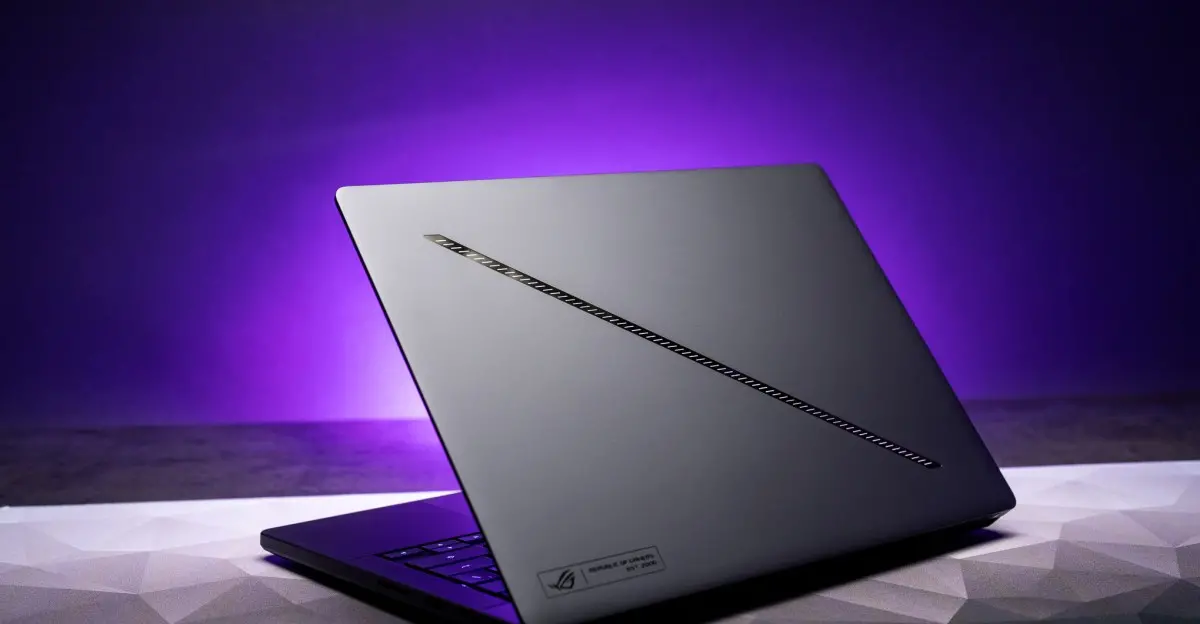
The Asus ROG Zephyrus G14 has long been a favorite among laptop enthusiasts who want a single device that can handle both demanding creative work and modern gaming. Since its debut in 2020, the G14 line has evolved through multiple redesigns, chip upgrades, and special editions, consistently earning praise for its blend of portability and power. For 2026, Asus has introduced new flagship models that switch from AMD processors to Intel's latest Panther Lake CPUs, bringing significant gains in battery efficiency and connectivity. But with prices soaring to unprecedented heights, the question is whether the G14 still offers the value that made it famous.
The G14’s Evolution: From Budget Darling to Premium Luxury
When the first Zephyrus G14 launched, it started at around $1,000, offering an AMD Ryzen 9 processor and an Nvidia RTX 2060 GPU in a compact 14-inch chassis. It was a revelation: a gaming laptop that didn't look like one, with a sleek magnesium-alloy build and an optional LED matrix on the lid. Over the years, Asus refined the design, introduced a 16-inch sibling (the G16), and eventually gave the G14 a complete overhaul in 2024, adopting a thinner profile, an OLED display, and a larger trackpad. The 2026 model builds on that foundation with Intel's Core Ultra 9 386H chip, which promises better power efficiency and integrated AI capabilities.
Yet the price trajectory has been steep. The 2025 AMD-based G14 with an RTX 5070 Ti and 16GB of RAM cost around $2,300. The 2026 Intel version with the same GPU and 16GB starts at $3,450, and the 32GB review unit tested here costs $3,600. That's a $1,000 premium for the Intel chip, a brighter OLED screen (500 nits SDR, 1,100 nits peak HDR), Thunderbolt 4, a full-size SD card slot, and roughly doubled battery life. Whether these upgrades justify the extra cost depends on individual needs, but it's hard to ignore that the previous generation remains a compelling alternative at a much lower price.
Design and Build: Familiar but Refined
The 2026 G14 retains the same chassis dimensions and weight (3.48 pounds) as the 2024 redesign, making it nearly identical in size to a 14-inch MacBook Pro. The lid features the now-signature slash lighting with 15 LED segments (up from 13 in the 2025 model), and the bottom panel uses circular vent holes instead of rectangular slots, which Asus says improves airflow. The keyboard remains one of the best on any Windows laptop, with deep, tactile key travel and a responsive feel that rivals ThinkPad-level quality. The mechanical trackpad is large and clicks solidly in most areas, though the bottom corners are slightly less responsive—a minor quibble given that most users will connect a mouse for gaming.
Port selection is generous: two USB-A 3.2 Gen 2, one Thunderbolt 4 USB-C, one USB-C 3.2 Gen 2 (with DisplayPort and Power Delivery), HDMI 2.1, a 3.5mm audio jack, and the aforementioned full-size SD card slot. This is a welcome addition for photographers and videographers who previously had to rely on slower microSD cards or external readers. The webcam is a 1080p unit with IR for Windows Hello, but it remains mediocre in low light, producing grainy images—a common complaint across many gaming laptops.
Performance: A Workhorse for Creatives and Gamers
Under the hood, the Intel Core Ultra 9 386H features 16 cores (6 performance, 10 efficiency) and a maximum turbo frequency of 5.4 GHz. Paired with an Nvidia RTX 5070 Ti Laptop GPU (5,888 CUDA cores) and 32GB of LPDDR5X RAM, the G14 handles demanding tasks with ease. In Lightroom Classic, editing 50-megapixel RAW photos felt snappy, with 100% previews loading quickly and adjustments applying without lag. Even on battery power, performance remained consistent, a testament to Panther Lake's efficiency. PugetBench for Photoshop scored 9941, and Premiere Pro exports completed in just over four minutes, outpacing the previous-gen AMD model by nearly two minutes.
Battery life is arguably the biggest improvement. In our battery rundown test (web browsing and video playback at 150 nits), the 2026 G14 lasted over 17 hours, compared to 8.5 hours for the 2025 AMD version. Real-world usage yielded around 10 hours of mixed work (Chrome, Slack, music streaming) at 80% brightness—enough to get through a full workday on a single charge. Gaming on battery cuts that time significantly, but five to six hours with sporadic light gaming is still impressive for a laptop this powerful.
Gaming Performance: Smooth Frame Rates in Modern Titles
When plugged in, the G14 delivers excellent gaming performance. In Battlefield 6 at native 2880x1800 resolution on High preset, frame rates hovered between 65 and 70 fps without DLSS. Helldivers 2, which lacks DLSS, ran at 80–90 fps. Marathon, using DLSS on Quality, averaged around 70 fps. The GPU can boost up to 130W total graphics power (TGP), a slight increase over the 2025 model's 120W, but the difference in real-world gaming is minimal—typically 5–10 fps at most.
The keyboard deck stays reasonably cool during gaming, though the bottom of the chassis becomes quite warm. Fan noise is tolerable in Performance mode but becomes more noticeable in Turbo mode, which overclocks the GPU and increases TGP by up to 20W. The speakers—six in total—are among the best on a Windows laptop, offering rich, full sound with a hint of stereo separation. Only Apple's MacBook Pro excels in this area for a 14-inch device.
The Price Problem: Is It Worth $3,600?
For the price of the reviewed configuration, one could purchase a base 14-inch M5 MacBook Pro (around $1,600) and still have enough left for a PlayStation 5 Pro or a Steam Deck OLED, with money to spare. That's a tough sell for a laptop that, while excellent, isn't dramatically better than its far cheaper predecessor. The 2025 AMD G14 with Ryzen AI 9 HX 370 and RTX 5070 Ti offers similar CPU and GPU performance, a virtually identical OLED display (though slightly dimmer), and only lacks Thunderbolt 4 and the SD card slot. It costs $2,300, making it a far more compelling value.
Asus has acknowledged this by keeping the 2025 AMD models in the lineup, selling them alongside the new Intel versions at lower prices. But this strategy may confuse buyers: why pay a $1,000 premium for better battery life and a brighter screen unless those features are mission-critical? For most, the answer is no. The G14 remains a fantastic laptop, but its position as a value leader has clearly shifted. It's now a luxury item for those who demand the absolute best in portability, battery life, and connectivity, even at a steep cost.
Component Report Card
- Screen: A – Bright, vivid OLED with 120Hz refresh rate and high HDR peak brightness.
- Webcam: C – Adequate for video calls in good light, but grainy in dim environments.
- Keyboard: A – Deep travel, tactile feedback, excellent for typing and gaming.
- Trackpad: B – Large and responsive but bottom corners don't click consistently.
- Port selection: A – Includes full-size SD, Thunderbolt 4, HDMI 2.1, two USB-A, and audio jack.
- Speakers: A – Rich, clear, and surprisingly loud for a 14-inch chassis.
- Number of ugly stickers to remove: 3 (one underneath the laptop).
Specifications
- Display: 14-inch 2880x1800 OLED, 120Hz, 500 nits SDR, 1100 nits HDR peak
- CPU: Intel Core Ultra 9 386H (16 cores, up to 5.4 GHz)
- GPU: Nvidia GeForce RTX 5070 Ti Laptop GPU (5,888 CUDA cores, 130W TGP)
- RAM: 32GB LPDDR5X (soldered)
- Storage: 1TB NVMe SSD
- Webcam: 1080p with IR for Windows Hello
- Connectivity: Wi-Fi 7, Bluetooth 6
- Ports: 1x Thunderbolt 4 USB-C, 1x USB-C 3.2 Gen 2, 2x USB-A 3.2 Gen 2, HDMI 2.1, full-size SDXC UHS-II, 3.5mm audio
- Battery: 73Wh
- Weight: 3.48 lbs (1.58 kg)
- Dimensions: 12.24 x 8.66 x 0.63–0.72 inches
- Price as reviewed: $3,599.99
The Asus ROG Zephyrus G14 has never been more capable or more expensive. It's the best all-rounder for those who need a single laptop for both creative work and gaming, with battery life that finally rivals a MacBook Pro. But that excellence comes at a price that pushes it out of the mid-range and into the premium luxury segment. For most buyers, the previous-generation AMD version remains the smarter choice—unless money is no object.
Source: The Verge News