

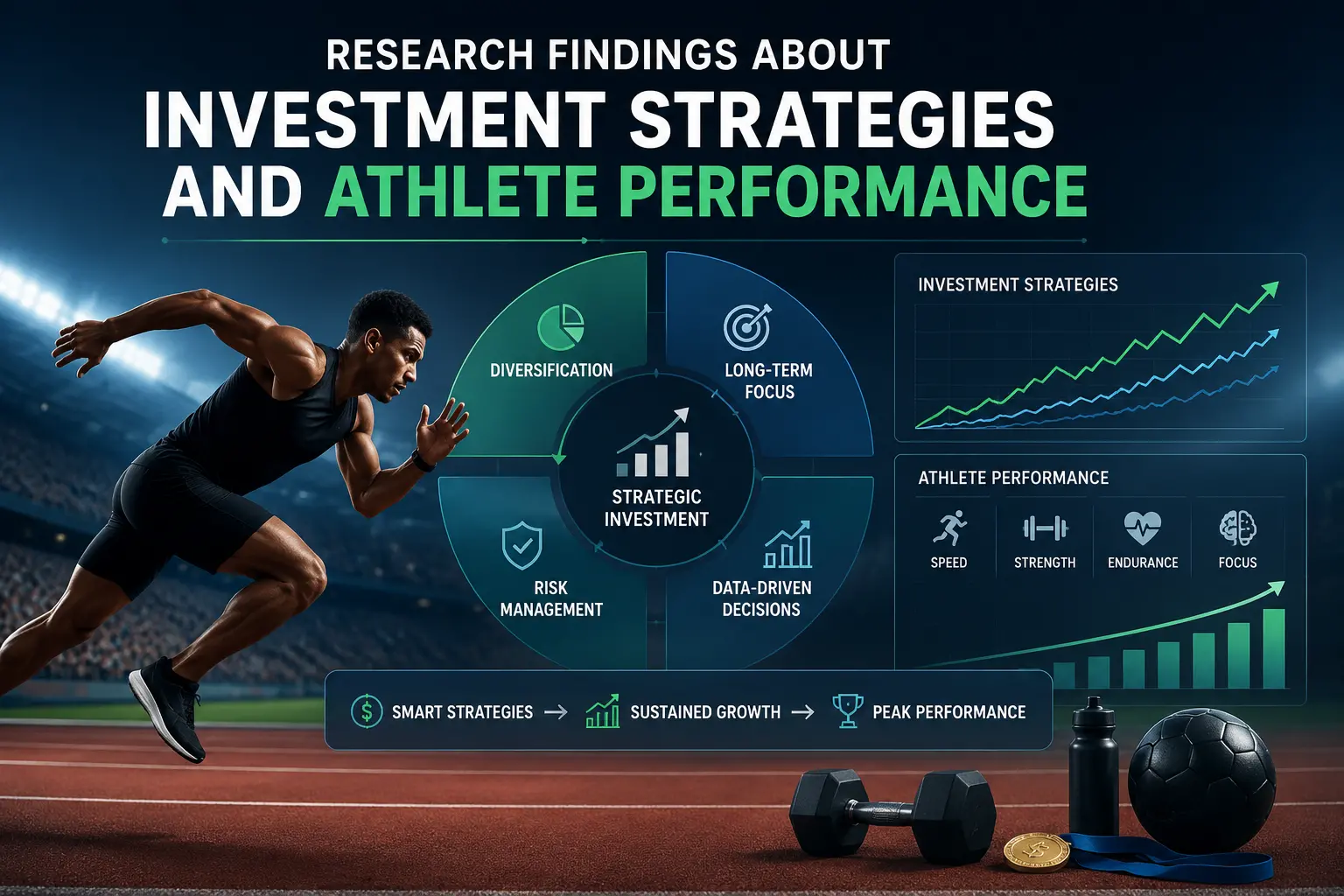
Athletes who treat their careers like long-term investments often perform better under pressure, recover faster from setbacks, and stay financially stable after retirement. Research findings about investment strategies and athlete performance show that smart financial planning doesn't just protect wealth — it can influence decision-making, mental focus, and career longevity.
Research suggests that athletes with structured investment strategies tend to experience lower financial stress, better long-term planning habits, and improved consistency in performance. Financial literacy, diversified investments, and disciplined decision-making often mirror the same habits elite athletes use in training and competition.
What Is Research Findings About Investment Strategies and Athlete Performance?
When people hear the phrase "investment strategies," they usually think about stocks, property, or retirement accounts. But in sports, the idea goes deeper. Athletes invest time, money, energy, and attention into their careers every single day.
Research findings about investment strategies and athlete performance explore how financial behavior, risk management, and long-term planning affect an athlete's physical and mental outcomes. That includes everything from sponsorship choices to post-career planning.
Definition Box:
Investment Strategy in Sports — A structured financial and career-planning approach athletes use to grow income, reduce financial risk, and support long-term performance and life stability.
Here's the thing most people overlook: athletic performance isn't only physical. Money stress changes behavior. An athlete worried about debt or unstable income probably won't recover mentally the same way as someone with a stable financial foundation.
Over the last decade, sports psychologists and financial researchers have started connecting financial literacy with confidence, discipline, and emotional resilience. That's a pretty interesting shift.
Why Research Findings About Investment Strategies and Athlete Performance Matters in 2026
The sports industry in 2026 looks very different from what it was even five years ago. Athletes aren't relying only on contracts anymore. Many are building personal brands, investing in startups, creating media businesses, and diversifying income streams while still competing.
That shift matters because careers in sports remain painfully short.
In most professional leagues, careers can end unexpectedly due to injury, competition, or declining performance. Research now shows that athletes who prepare financially tend to make calmer career decisions. They aren't forced into risky sponsorships or rushed contract negotiations just to survive.
I've seen younger athletes focus heavily on luxury spending early in their careers because social pressure is intense. Then injuries happen. Suddenly the income disappears while expenses remain high. Financial instability creates stress that often spills into training consistency and performance.
What makes this topic especially relevant in 2026 is the rise of athlete entrepreneurship. Players today are expected to understand branding, investments, tax planning, and wealth management almost as much as performance metrics.
Secondary areas closely connected to this topic include:
athlete financial planning
sports performance analytics
long-term wealth management for athletes
Those topics now overlap more than ever.
Expert Tip
Athletes who automate investments early often avoid emotional spending cycles during career highs. In most cases, consistency beats flashy financial moves.
What Research Actually Says About Financial Stability and Athletic Success
Several sports management studies suggest athletes dealing with financial uncertainty report higher anxiety levels and reduced concentration during competition. That's not surprising if you think about it.
Mental bandwidth matters.
When an athlete constantly worries about money, sponsorship renewals, or debt obligations, focus gets divided. Performance suffers in subtle ways first. Recovery slows. Sleep quality drops. Decision-making becomes reactive.
One surprising finding from sports psychology research is that athletes with diversified financial interests sometimes perform better under pressure. At first glance, you'd think outside business activity would distract them.
Oddly enough, the opposite can happen.
Having income beyond sports may reduce desperation. That emotional stability can improve confidence during competition because the athlete's identity isn't tied completely to one result.
Let me be direct: obsession isn't always healthy. Some athletes perform better when their entire self-worth doesn't depend on one game or one season.
That point usually sparks debate, but there's growing evidence behind it.
How to Build Smarter Investment Strategies for Better Athlete Performance
A lot of athletes know they should invest. Fewer know how to create a sustainable strategy that actually supports performance instead of distracting from it.
Here's a practical step-by-step approach.
How to Create an Athlete Investment Strategy — Step by Step
1. Build Financial Literacy First
Before investing in anything, athletes need to understand taxes, risk, contracts, and cash flow basics.
Sounds boring. It's not.
One bad investment decision can wipe out years of earnings. Financial education creates confidence and reduces vulnerability to scams or emotional decisions.
Athlete financial planning starts with awareness, not complicated portfolios.
2. Separate Lifestyle Spending From Wealth Building
Many athletes increase spending immediately after signing contracts. Cars, houses, travel, luxury items — it adds up quickly.
Research consistently shows lifestyle inflation creates long-term instability.
A simple system works better:
fixed lifestyle budget
automated investments
emergency reserves
retirement contributions
That structure protects both finances and mental health.
3. Diversify Investments Carefully
Putting all money into one business venture or trend rarely ends well.
Smart athletes often spread investments across multiple categories such as:
real estate
index funds
business ownership
media opportunities
long-term savings accounts
What most guides miss is that diversification isn't only about profit. It's also about emotional security.
4. Work With Advisors Who Understand Sports Careers
Traditional financial advice doesn't always fit athletes.
Sports income can be unpredictable, heavily taxed, and concentrated into short earning windows. Advisors familiar with athlete lifestyles generally provide better planning around contracts, endorsements, and retirement transitions.
That difference matters more than people realize.
5. Protect Mental Performance
Investment decisions should reduce stress, not create more of it.
If managing investments becomes emotionally exhausting, performance may decline. Many elite athletes intentionally simplify their portfolios for this exact reason.
Honestly, simplicity probably beats complexity for most athletes.
The Link Between Sports Performance Analytics and Financial Decision-Making
There's an interesting connection between sports performance analytics and investing behavior.
Elite athletes already rely on data for training:
recovery tracking
nutrition metrics
sleep analysis
workload management
Financial investing follows a similar logic. Successful investors avoid emotional reactions and focus on long-term trends.
That mindset overlap is fascinating.
Athletes trained to trust systems instead of emotions often adapt well to disciplined investing. Patience, repetition, and calculated risk already exist inside competitive sports culture.
In my experience, athletes who approach money the same way they approach training usually make fewer impulsive decisions.
That's not always glamorous. But it works.
Expert Tip
Treat investing like strength training. Small, repeated actions over years usually outperform aggressive short-term gambles.
A Realistic Example of Investment Strategy Affecting Performance
Imagine a professional football player entering his third season.
He signs a strong contract and immediately spends heavily on luxury purchases while investing most remaining money into a friend's restaurant business. The restaurant struggles. Expenses rise. Suddenly the athlete feels pressure to maintain his lifestyle.
Performance dips the following season.
Training becomes inconsistent because stress increases. Sleep quality drops. Contract negotiations become emotional instead of strategic.
Now compare that with another athlete earning the same salary.
This athlete keeps expenses controlled, builds long-term index investments, and works with a financial advisor familiar with sports contracts. Financial pressure stays manageable. Recovery and focus improve because future uncertainty feels lower.
Both athletes had talent. Only one created stability.
That example might sound simple, but versions of this happen constantly in professional sports.
The Counterintuitive Truth About Risk-Taking
People often assume elite athletes should also become aggressive investors because they're naturally competitive.
That assumption is usually wrong.
Competitive personalities can actually become vulnerable to risky financial behavior. Chasing quick returns mirrors gambling psychology more than disciplined investing.
Research findings about investment strategies and athlete performance increasingly support conservative long-term planning over aggressive speculation.
Slow growth doesn't sound exciting. But stability protects careers.
One former trainer I spoke with years ago said something I still remember: "Athletes perform best when they stop trying to prove something outside the sport."
There's a lot of truth in that.
Common Mistake Athletes Make With Wealth Management
Confusing Income With Wealth
High income doesn't automatically create long-term wealth.
That's probably the biggest misconception in professional sports.
Many athletes earn substantial money briefly but fail to build lasting financial systems. Without structure, even large contracts disappear surprisingly fast.
Long-term wealth management for athletes depends more on habits than salary size.
A mid-level athlete with disciplined investing often ends up financially healthier than a superstar who spends impulsively.
That's the uncomfortable reality.
Expert Tips and What Actually Works
Here's what I've noticed from studying both sports psychology and financial behavior: routines matter more than motivation.
Athletes already understand discipline physically. The challenge is applying the same patience financially.
Some practical habits consistently appear among financially stable athletes:
automatic investing every month
limiting emotional purchases after major wins
avoiding investment trends pushed by friends
maintaining multiple income streams
planning for retirement early
Notice none of those are flashy.
And honestly, that's the point.
Athlete financial planning usually succeeds when it's boring enough to stay consistent for years.
Expert Tip
If an investment opportunity sounds tied to hype, urgency, or social status, athletes should probably pause before committing money.
Why Younger Athletes Struggle With Investment Decisions
Younger athletes face unique pressure today because social media constantly rewards visible wealth.
Luxury lifestyles get attention. Quiet financial discipline doesn't.
That creates distorted expectations.
A rookie athlete seeing others post expensive purchases may feel financially behind even when earning excellent money. Emotional spending becomes part competition, part identity signaling.
What most people overlook is how exhausting that cycle becomes mentally.
Research into sports performance analytics increasingly includes emotional stress markers because psychological fatigue affects physical performance more than many teams once believed.
The smartest younger athletes now hire financial educators early instead of waiting until problems appear.
That's a major shift happening across professional sports.
People Most Asked About Research Findings About Investment Strategies and Athlete Performance
How do investment strategies affect athlete performance?
Investment strategies influence stress levels, confidence, and long-term decision-making. Athletes with structured financial plans often report greater emotional stability and improved focus during competition.
Why is financial literacy important for athletes?
Financial literacy helps athletes avoid poor investment decisions, scams, and unsustainable spending habits. It also supports healthier career planning and retirement preparation.
Can financial stress reduce sports performance?
Yes. Financial stress can increase anxiety, reduce concentration, disrupt sleep, and negatively affect recovery. Mental strain often impacts physical performance indirectly.
What investments are most common among athletes?
Many athletes invest in real estate, diversified stock portfolios, businesses, and media ventures. Conservative long-term investing tends to produce more stable outcomes than high-risk speculation.
Do financially stable athletes perform better?
Research suggests financially stable athletes often make calmer decisions, handle pressure more effectively, and maintain stronger long-term focus throughout their careers.
What role does sports performance analytics play in investing?
Sports performance analytics encourages data-driven thinking. Athletes familiar with tracking performance metrics may adapt more naturally to disciplined investment strategies and long-term financial planning.
Should young athletes hire financial advisors early?
In most cases, yes. Early guidance can prevent major mistakes and help athletes create sustainable systems before income and lifestyle pressures increase.
Final Thoughts
Research findings about investment strategies and athlete performance continue to show that financial habits affect far more than bank accounts. They influence confidence, stress management, recovery, and long-term career stability.
Athletes who approach money with patience, structure, and discipline often create stronger foundations for sustained success. Talent still matters, obviously. But emotional stability and smart planning probably matter more than many people realize.
The biggest takeaway? Financial security doesn't distract elite athletes from performance. In many cases, it strengthens it.
Our network platforms including press release distribution services and digital marketing agency solutions help businesses, startups, and SEO professionals boost brand visibility, gain high authority backlinks, improve SEO ranking, and drive organic traffic through instant publishing and targeted media coverage.