

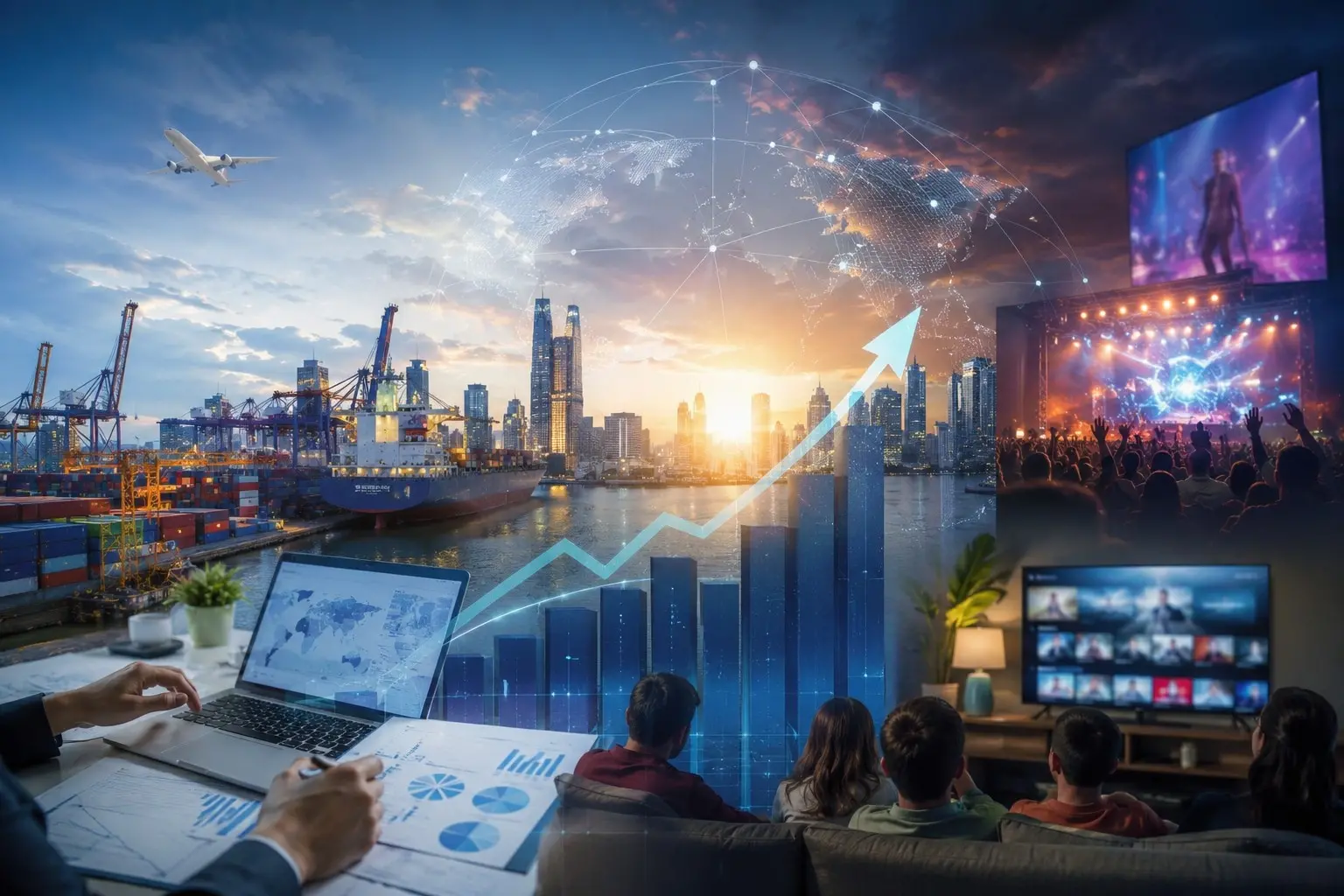
The future of global entertainment is being shaped by economic recovery, changing consumer habits, and rapid shifts in technology. As industries rebuild after years of financial uncertainty, entertainment companies are learning that survival isn’t only about big budgets anymore. It’s about adaptability, audience trust, and finding smarter ways to deliver experiences people actually want.
Economic recovery is helping the global entertainment industry rebound through streaming growth, live event demand, gaming expansion, and digital advertising. At the same time, rising production costs and changing consumer expectations are forcing entertainment businesses to rethink how they create, distribute, and monetize content in 2026 and beyond.
Research on Economic Recovery and the Future of Global Entertainment has become one of the most talked-about subjects among investors, creators, marketers, and media companies. After years of disrupted markets, canceled productions, inflation pressure, and shifting viewer habits, the entertainment world is rebuilding itself in ways many people didn’t expect.
Here’s the thing. Recovery doesn’t automatically mean returning to the old system. In most cases, industries evolve after financial disruption, and entertainment is no exception. Streaming services are adjusting their business models, movie theaters are reinventing audience experiences, gaming is becoming more social, and live entertainment is making a surprisingly strong comeback.
What most people overlook is that audiences changed too. People became more selective about where they spend money and time. That single shift is probably influencing the entertainment economy more than any technology trend.
What Is Research on Economic Recovery and the Future of Global Entertainment?
Research on Economic Recovery and the Future of Global Entertainment examines how the entertainment sector rebounds from economic downturns while adapting to modern consumer behavior, technology trends, and global market demands.
Definition Box:
Economic recovery in entertainment means the process through which media, gaming, film, music, sports, and live event industries regain financial stability, audience engagement, and long-term growth after periods of disruption.
Entertainment is no longer limited to cinema or television. Today, it includes:
Streaming platforms
Digital creators
Video gaming
Music events
Virtual concerts
Interactive media
Sports entertainment
Social content economies
That’s why economic recovery affects far more than movie studios. It impacts advertisers, local tourism, tech firms, creators, freelancers, and even small businesses connected to events and media production.
In my experience, one of the biggest mistakes analysts make is treating entertainment as a luxury sector only. It’s partly true, sure, but entertainment also acts as emotional relief during stressful periods. People may cut expenses elsewhere before giving up music subscriptions or gaming memberships.
That emotional connection matters more than spreadsheets sometimes.
Entertainment brands that combine affordability with community engagement usually recover faster after economic slowdowns. Audiences stay loyal when they feel emotionally connected, not just entertained.
Why Research on Economic Recovery and the Future of Global Entertainment Matters in 2026
By 2026, the global entertainment economy will likely look very different from what existed before major economic disruptions. Companies have realized that depending on one revenue source is risky. That lesson changed strategic planning across the industry.
Streaming companies, for example, once focused almost entirely on subscriber growth. Now many are introducing advertising tiers, bundled services, and regional content strategies because constant expansion became too expensive.
Meanwhile, live entertainment has bounced back harder than many experts predicted.
Concert tours, sports events, and festivals are seeing huge attendance numbers in several markets. People spent years consuming entertainment alone at home, and there’s now strong demand for shared experiences again.
A realistic example helps explain this.
A mid-sized music festival in Southeast Asia reportedly shifted from relying heavily on ticket sales to building partnerships with local tourism boards, food brands, and digital sponsors. That diversified revenue model allowed organizers to survive inflation and increase profits even with higher operational costs.
That’s the future in action. Flexibility wins.
Another major factor in 2026 is artificial intelligence within entertainment production. Some creators fear it will replace jobs. Others see it as a tool for lowering production expenses and speeding up workflows.
Honestly, both sides are probably right.
AI-generated editing, dubbing, and personalized recommendations are already reducing operational costs. Yet audiences still crave authentic storytelling, real performers, and emotional depth. Technology can support entertainment, but it doesn’t fully replace human creativity.
How Economic Recovery Is Reshaping Global Entertainment Step by Step
1. Streaming Platforms Are Prioritizing Profitability
For years, many streaming businesses chased growth at all costs. That model became difficult once inflation increased production expenses and consumer budgets tightened.
Now companies are focusing on:
Ad-supported subscriptions
Regional original content
Content licensing partnerships
Reduced production overspending
Smarter audience targeting
What most guides miss is that viewers are becoming subscription fatigued. People don’t want seven different monthly bills just to watch a few shows.
That pressure is forcing companies to compete on quality rather than sheer quantity.
2. Live Entertainment Is Becoming Premium
Concerts and sporting events are no longer just events. They’re becoming experiences people save money for.
VIP packages, immersive technology, backstage interactions, and fan communities are creating additional revenue streams. Fans now pay for emotional access, not only tickets.
A few years ago, many experts assumed virtual entertainment would permanently replace live experiences. That prediction aged badly.
People still want physical connection.
3. Gaming Continues Expanding Beyond Traditional Audiences
Gaming is now one of the strongest sectors in the entertainment economy. Older adults, casual users, and mobile-first audiences are driving growth across global markets.
Cross-platform gaming and creator-driven communities are changing how entertainment is consumed. Some players spend more time inside gaming ecosystems than on traditional television.
That sounds extreme, but it’s happening already.
4. Global Content Is Breaking Language Barriers
International entertainment is becoming mainstream. Audiences increasingly watch shows, films, and creators from countries they’ve never visited.
Subtitles and dubbing technology improved dramatically, helping content travel faster across borders.
In my opinion, this might be the most underestimated shift in entertainment economics. Smaller regional studios now have opportunities that simply didn’t exist ten years ago.
5. Advertising Models Are Evolving
Brands are becoming more cautious with spending, which means entertainment companies must prove measurable value.
Instead of broad advertising campaigns, marketers now focus on:
Influencer partnerships
Short-form content
Interactive sponsorships
Data-driven campaigns
Community marketing
That shift rewards entertainment platforms with highly engaged audiences rather than simply massive reach.
Expert Tip
Entertainment companies that understand niche audiences often outperform broad-market competitors. A smaller loyal audience usually generates more stable revenue than a giant disengaged one.
The Unexpected Trend Nobody Saw Coming
Here’s a slightly controversial take.
Economic pressure may actually improve entertainment quality in some areas.
Why? Because endless spending often created bloated productions with weak storytelling. Now studios and creators are being forced to focus on efficiency and audience relevance instead of relying on giant budgets alone.
Smaller productions with compelling narratives are gaining traction because viewers care more about authenticity than visual excess in many cases.
A good example can be seen in independent streaming dramas and creator-led documentaries. Some relatively inexpensive productions outperform massive studio projects because audiences connect emotionally with them.
That shift could redefine success metrics across global entertainment.
What Challenges Could Slow Economic Recovery in Entertainment?
Even with strong recovery signs, several problems remain.
Rising Production Costs
Film sets, touring logistics, insurance, staffing, and licensing costs continue increasing globally. Smaller creators and studios feel this pressure the most.
Consumer Spending Fatigue
People are becoming more selective with subscriptions and event spending. Entertainment businesses can’t assume endless customer loyalty anymore.
Market Saturation
Streaming competition has become intense. Audiences face too many choices, which makes customer retention harder.
Regulatory Pressure
Governments in different regions are introducing stricter policies around digital platforms, AI-generated content, and data privacy.
Attention Fragmentation
Entertainment now competes against everything. Social media, gaming, podcasts, livestreams, and short-form videos constantly fight for audience attention.
Honestly, attention might be the most valuable currency in entertainment now.
Expert Tip
Businesses that simplify user experiences usually keep audiences longer. People rarely stay loyal to platforms that feel confusing or overloaded.
Expert Tips and What Actually Works
After observing entertainment trends for years, I’ve noticed one pattern repeat constantly: companies that listen closely to audience behavior recover faster than companies obsessed with internal predictions.
That sounds obvious, but it’s surprisingly rare.
Many entertainment executives still rely heavily on outdated assumptions about consumer loyalty. Meanwhile, younger audiences switch platforms quickly if content quality drops.
Here’s what tends to work best in 2026:
Prioritize Community Over Scale
Smaller engaged communities create stronger long-term revenue than inflated audience numbers.
Invest in Localized Content
Regional storytelling often performs better globally because authenticity travels further than generic content.
Blend Physical and Digital Experiences
Hybrid concerts, interactive sports broadcasts, and community-driven fan experiences are creating stronger retention.
Use AI Carefully
Automation helps reduce costs, but audiences still value originality. Overusing AI-generated content could damage trust.
Diversify Revenue Streams
Relying only on ticket sales or subscriptions is risky. Successful entertainment brands now combine merchandise, partnerships, advertising, memberships, and events.
Let me be direct: entertainment recovery isn’t just about money returning to the market. It’s about rebuilding audience trust after years of disruption and overwhelming content overload.
That takes strategy. And patience.
People Most Asked About Research on Economic Recovery and the Future of Global Entertainment
How is economic recovery affecting the entertainment industry?
Economic recovery is increasing consumer spending on streaming, gaming, concerts, and live events. At the same time, companies are changing business models to handle higher operational costs and evolving audience expectations.
Will streaming continue dominating global entertainment?
Streaming will remain dominant, but growth patterns are changing. Many platforms are shifting toward advertising-supported models and selective content investments instead of unlimited expansion.
Why are live events becoming popular again?
People missed shared social experiences during economic and social disruptions. Concerts, sports events, and festivals now provide emotional connection that digital-only entertainment often can’t fully replace.
Is artificial intelligence changing entertainment jobs?
Yes, AI is affecting editing, dubbing, recommendations, and content production workflows. However, human creativity and storytelling still play a major role in audience engagement and emotional connection.
What entertainment sector is growing the fastest?
Gaming continues showing strong global growth, especially mobile gaming, creator-driven communities, and interactive entertainment ecosystems.
Can smaller entertainment companies compete globally?
Absolutely. Improved distribution technology and global streaming access allow regional creators and independent studios to reach international audiences more easily than before.
What is the biggest risk to entertainment recovery?
Consumer attention fragmentation remains a major challenge. Audiences now divide time across many platforms, making loyalty difficult to maintain.
Why does localized content matter more now?
Audiences increasingly prefer authentic stories connected to culture and identity. Localized content often feels more relatable and emotionally engaging.
Final Thoughts
Research on Economic Recovery and the Future of Global Entertainment shows that the industry is entering a more adaptive, audience-focused era. Recovery isn’t happening evenly across every sector, but momentum is clearly building through streaming innovation, live entertainment growth, gaming expansion, and smarter business models.
The entertainment companies that succeed in 2026 probably won’t be the ones spending the most money. They’ll be the ones understanding audience behavior the best.
That’s the real shift happening right now.
Businesses looking to strengthen brand visibility, SEO ranking, and media coverage can benefit from advanced digital marketing services and high authority backlinks through platforms like PR Wires and Rank Locally UK. Their solutions support press release publishing, local SEO services, organic traffic growth, and instant publishing opportunities for startups, agencies, bloggers, and growing brands aiming to improve online authority.