

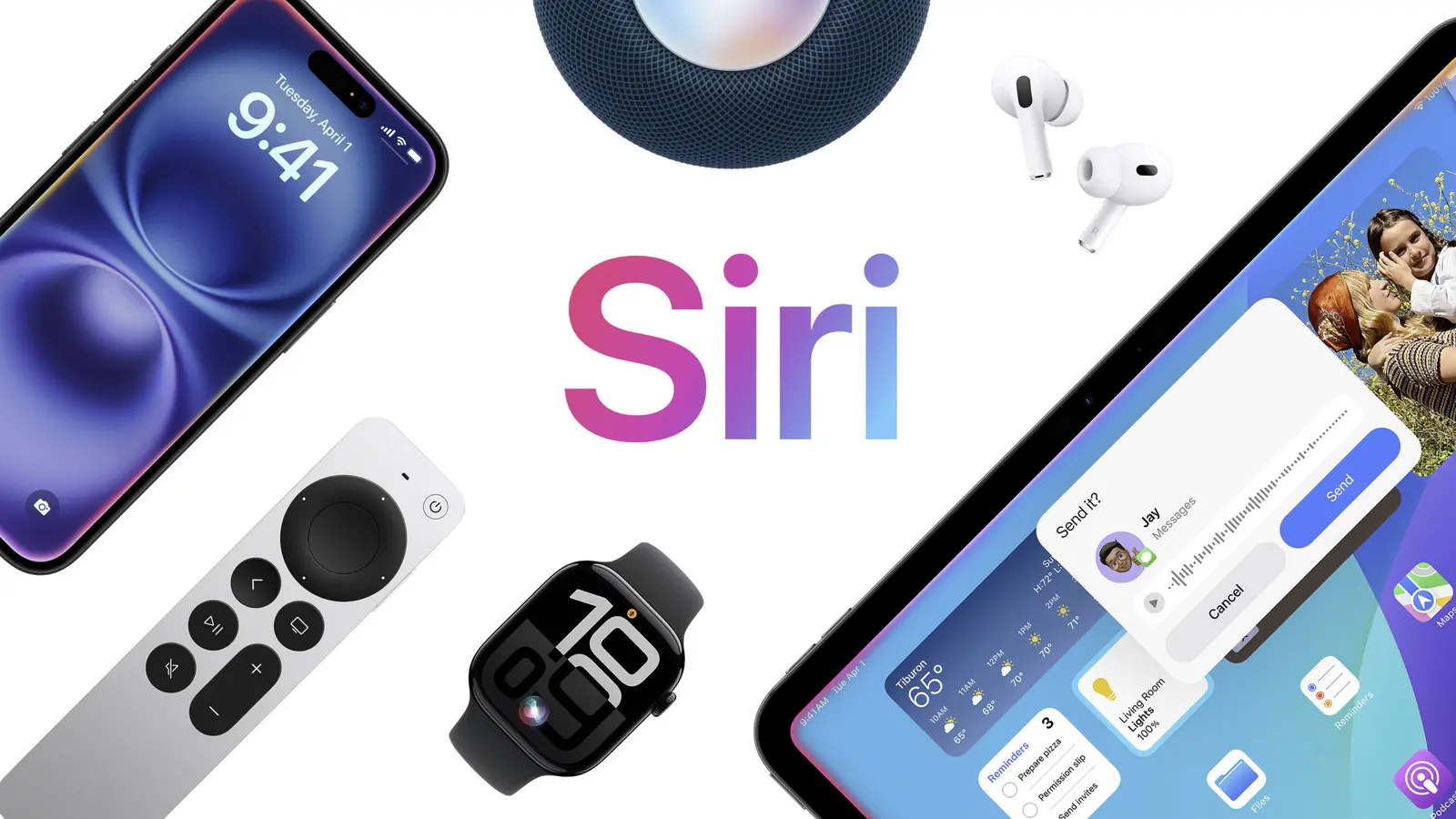
Apple has agreed to pay $250 million to settle a class-action lawsuit that accused the company of misleading iPhone buyers in the United States about the timely arrival of an updated, AI-powered version of Siri. The legal action, filed shortly after Apple failed to launch the enhanced assistant in 2024 as promised, highlights the growing tension between marketing hype and actual product delivery in the fast-moving field of artificial intelligence.
The settlement, which requires approval from a federal judge, will compensate US consumers who purchased an iPhone 16 series device or an iPhone 15 Pro model, expecting the new Siri capabilities that Apple showcased at its Worldwide Developers Conference (WWDC) in June 2024. At that event, Apple introduced Apple Intelligence, a suite of AI features that included a more conversational and context-aware Siri capable of understanding personal content on the device and performing actions within apps. The company’s marketing heavily promoted these features as a key reason to upgrade to the latest iPhone hardware.
However, nearly two years later, that advanced version of Siri has still not been released. Apple slowly rolled out other components of Apple Intelligence—such as text editing tools, image generation, and ChatGPT integration—throughout 2024 and 2025, but the core Siri upgrade never materialized. The company did not publicly acknowledge the delay until March 2025, more than five months after the iPhone 16 launched. By that time, millions of customers had already purchased devices based partly on the promise of a smarter assistant.
Background: The Promise of Apple Intelligence
Apple Intelligence was positioned as a major leap forward for the company’s software ecosystem. At WWDC 2024, executives demonstrated Siri understanding the context of emails, messages, and photos, and taking actions like adding events to calendars or sending files to contacts. The demos drew comparisons to competing AI assistants from Google and OpenAI, and analysts predicted it would drive a significant upgrade cycle. Apple even ran advertising campaigns showing the new Siri features in action, which were later pulled after the delay became public.
The failure to deliver on time has been attributed to the technical complexity of on-device AI processing, as well as Apple’s desire to maintain user privacy by running models locally rather than in the cloud. The company’s initial approach relied on its own large language models, but development reportedly fell behind schedule. In a surprising move, Apple eventually partnered with Google to use the Gemini AI models to power the new Siri, a collaboration that was not part of the original plan. This partnership underscores the challenges even the world’s most valuable company faces in catching up to AI leaders.
The Lawsuit and Settlement Details
The class-action lawsuit, filed in a US district court in California, alleged that Apple violated consumer protection laws by falsely advertising features that did not exist. The plaintiffs argued that Apple knew or should have known that the new Siri would not be ready in 2024, yet continued to market the iPhone 16 as a device capable of running Apple Intelligence. The settlement, valued at $250 million, is one of the largest ever paid by Apple in a consumer fraud case. Eligible claimants include anyone who bought an iPhone 16, iPhone 16 Plus, iPhone 16 Pro, iPhone 16 Pro Max, or iPhone 15 Pro in the US before the delay announcement in March 2025. Each claimant may receive a payment of $50 to $100, depending on the number of valid claims. Notably, Apple does not admit any wrongdoing as part of the settlement, a standard clause that allows the company to avoid legal liability while compensating affected customers.
The settlement also requires Apple to change its advertising practices for AI features. Specifically, the company must now include explicit disclaimers on product pages and ads whenever a software feature is not yet available at the time of a product’s launch. This requirement could set a precedent for how tech companies handle future AI rollouts.
Impact on Apple and the Broader Industry
The $250 million payout is a financial blow, but for Apple, the reputational damage may be more significant. The company has long prided itself on delivering polished, reliable products that work as advertised. The Siri debacle has eroded consumer trust and given rivals an opening to highlight their own AI capabilities. Google, which now provides the underlying models for Apple’s assistant, has been able to showcase its Gemini integration as a sign of Apple’s dependence on its technology. Meanwhile, Samsung has aggressively marketed its Galaxy AI features, which launched on time with the Galaxy S24 series in early 2024.
Apple has now committed to launching the new Siri this year, reportedly as part of iOS 27, the next major version of its mobile operating system. The update is said to include not only the context-aware assistant but also a range of other AI enhancements, such as proactive suggestions and deeper third-party app integration. The company is also working on bringing the feature to Macs and iPads running macOS 28 and iPadOS 28, respectively. However, given the history of delays, many consumers remain skeptical.
The case also highlights a broader industry challenge: the gap between AI demos and real-world deployment. At a time when every major tech company is racing to integrate generative AI into its products, the pressure to announce features early—sometimes before they are fully functional—has led to a pattern of overpromising and underdelivering. Apple’s settlement could encourage more caution, or it could simply become a cost of doing business in the AI era.
Timeline of Key Events
- June 2024: Apple announces Apple Intelligence and a new Siri at WWDC, promising a 2024 launch.
- September 2024: iPhone 16 lineup launches with marketing centered on Apple Intelligence; Siri features are not included.
- Late 2024 to early 2025: Apple rolls out text editing, image generation, and ChatGPT integration, but no Siri upgrade.
- March 2025: Apple publicly acknowledges the Siri delay, citing technical challenges.
- May 2026: Apple agrees to $250 million settlement to resolve class-action lawsuit.
- 2026 (planned): Apple announces new Siri will launch with iOS 27, powered by Google Gemini models.
Consumer Reactions and Legal Perspectives
Many iPhone users have expressed frustration over the broken promise. For some, the delayed Siri was a deciding factor in purchasing a new phone. “I upgraded from an iPhone 12 specifically for the AI Siri, and it still doesn’t work,” said one plaintiff in court documents. Others noted that while other Apple Intelligence features have been useful, the core assistant is what they wanted most. Legal experts say the settlement is a fair outcome for both sides. “Apple avoids a potentially costly trial and the risk of a larger verdict, while consumers get some compensation for their disappointment,” said a law professor quoted in the case. “But it also sends a message that companies need to be more honest about product timelines.”
The settlement comes as Apple faces increased scrutiny from regulators in the US and Europe over its App Store practices and market dominance. The company’s stock price dipped slightly after the news but recovered quickly, suggesting that investors view the payout as manageable. However, the long-term impact on Apple’s brand loyalty remains to be seen. If the new Siri finally delivers on its promises later this year, the company may be able to rebuild trust. If not, further legal challenges could follow.
Looking Ahead: iOS 27 and the Future of Siri
Apple has not released a specific release date for iOS 27, but it is expected to be announced at WWDC 2026 and launch in the fall. The new Siri, powered by Google’s Gemini models, will be able to understand natural language queries about a user’s calendar, messages, photos, and more, and perform actions across apps. Apple has also promised that privacy will remain a priority, with most processing done on-device and only complex requests sent to the cloud. The company is also developing its own foundational AI models for future versions, reducing reliance on Google. But for now, the partnership is essential to bringing the feature to market.
The Siri saga is a cautionary tale about the dangers of overpromising in the AI race. As other companies like Microsoft, Google, and OpenAI continue to push boundaries, Apple has learned that even the most carefully planned announcements can go awry. The $250 million settlement may close one chapter, but the real test will come when the new Siri is finally in the hands of users.
Source: Engadget News